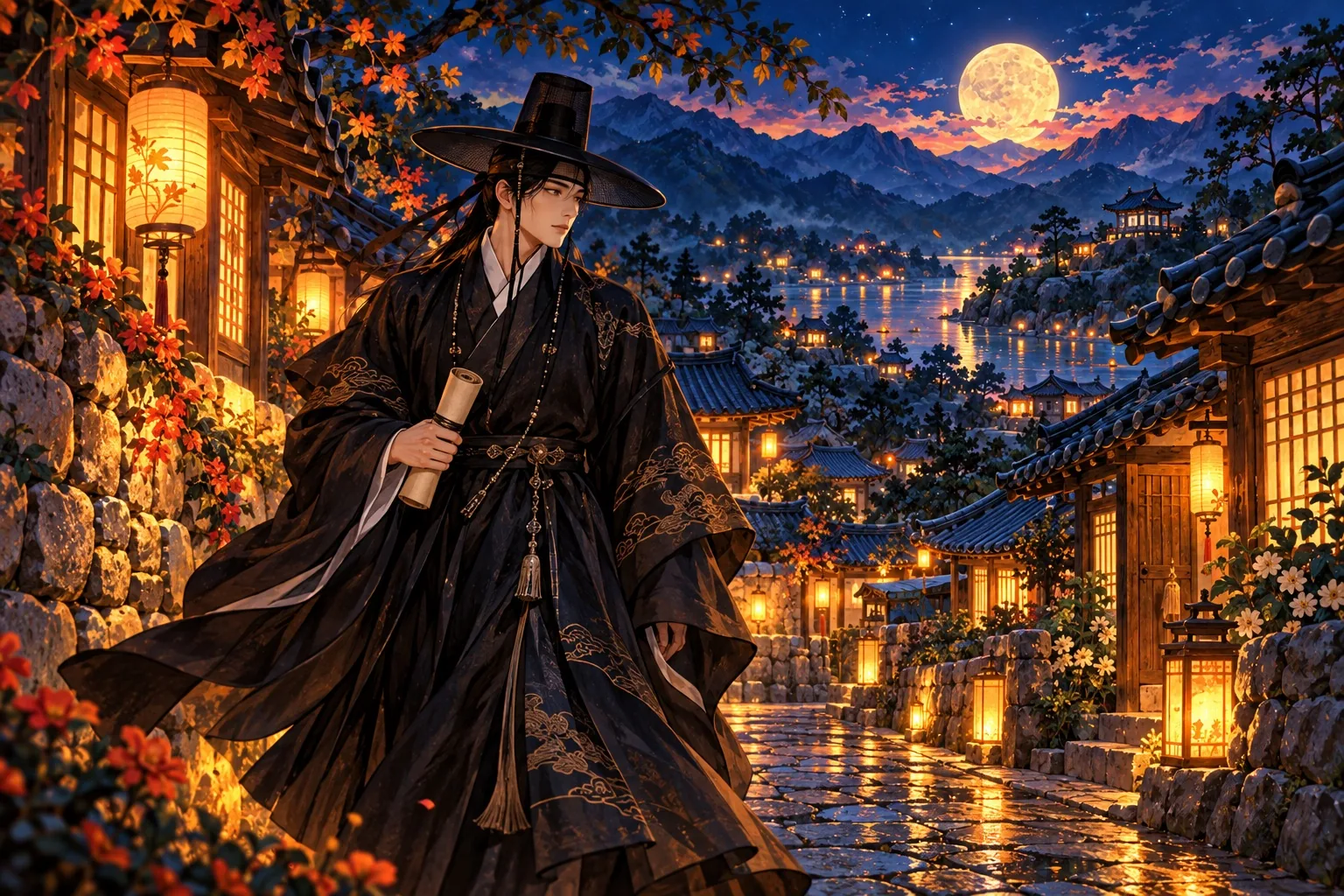
In Korean belief, nobody makes the journey to the afterlife alone. When a person’s time comes, messengers arrive from the underworld to collect their soul and lead it away. These are the jeoseung saja (저승사자), “messengers of the underworld”, Korea’s grim reapers. Thanks to television dramas, films and, most recently, an animated hit about K-pop demon hunters, they are now some of the most recognisable figures in Korean folklore: pale-faced men in black robes and wide black hats, polite, unhurried and impossible to escape.
Who are the jeoseung saja?
The Encyclopedia of Korean Culture defines the jeoseung saja simply as the go-betweens who take a person to the underworld after death. Jeoseung (저승) is the native Korean word for the world of the dead, as opposed to iseung (이승), the world of the living. Korean ideas about the afterlife grew from a mix of old native beliefs, Buddhism and Daoism, and over time the jeoseung came to be imagined as a kind of bureaucracy, with judges, records and officers, ruled over by King Yeomra. The saja are its officers, sent out to bring in the souls whose names have been called.
They usually come in threes. In the shamanic rituals of Seoul they are called the saja samseong, the three messengers: the messenger of heaven, the messenger of earth and the messenger of humankind. The encyclopedia points out that numbers like three or seven are symbolic, meaning that there are countless messengers, a bit like the constables of a police station.
What do they look like?
The image most people know comes from modern drama: a tall, handsome man in a long black coat, a black gat (the traditional wide-brimmed horsehair hat), and pale, almost white make-up. On screen the reaper is usually calm and well-mannered, almost courtly.
The older tradition was rougher. In shamanic ritual, the encyclopedia says, the saja appear as soldiers: rude, dim-witted and rough, demanding and hard to deal with, more like grumpy officials than elegant angels of death. That is how they appear in the shaman paintings of Hwanghae province and in the Buddhist paintings of the Ten Kings of the underworld.
Feeding the messengers
Because the saja were believed to arrive at the moment of death, Korean families took care to receive them properly. Right after someone died, a small table of food, the sajabap or “messengers’ meal”, was set outside the main gate for them. In the southern part of Gyeonggi province, the encyclopedia describes a sajasang, a messengers’ table, made by setting a winnowing basket on a wooden mortar and filling it with food, straw sandals for the long road and coins for the journey.
The offering always went in the yard, never inside the house. If the messengers were invited indoors, people feared, they might not leave, and they might take someone else with them. The hope was that well-fed messengers, with new sandals and a little money in their pockets, would treat the soul gently on the road to the underworld.
Bargaining with death
Korean tradition is full of stories about people trying to bargain with, bribe or trick the reapers, and the jeoseung saja were not always incorruptible. In shamanic rituals for the dead, the messengers’ scenes can be surprisingly comic. In one Hwanghae province rite described by the encyclopedia, the shaman plays the saja, who demand money, complain that the food offered is too small, bully the dead person’s soul, or act lazy, nap and pick lice from their clothes, while the family pays up to keep them happy and stop them from staying behind to claim another life.
Folktales tell of reapers who come for the wrong person because two people share a name, of messengers fed so well by a grateful family that they quietly let the soul go, and of clever people who keep the reaper talking until the hour has passed. Under the humour lies an old wish shared everywhere: that even death might be persuaded to wait a little longer.
On Jeju Island, a shamanic myth called Chasa bonpuri tells the story of Gangnim, a brave local official who travelled to the underworld and was taken into King Yeomra’s service, becoming the first of the messengers who bring the dead to judgement.
The saja on screen
The jeoseung saja have become one of Korean pop culture’s favourite figures. The 2016 drama Guardian: The Lonely and Great God gave its reaper a black coat, a fedora and a sad past, and made him a fan favourite. The 2017 film Along with the Gods: The Two Worlds, based on a popular webtoon, followed three underworld guardians escorting a soul through seven trials. In 2025, the animated film KPop Demon Hunters turned the reapers into the Saja Boys, a demon boy band whose name and black outfits nod directly to the jeoseung saja.
These modern versions are much more glamorous than the grumbling soldiers of the old rituals, but they keep the essentials: the black clothes, the gat, the pale face, the sense of a messenger who is only doing his job.
Quick facts
Jeoseung saja are the messengers of the Korean underworld, who collect souls at death and lead them to judgement before King Yeomra. They traditionally come in threes. Families set out food, straw sandals and coins for them outside the gate, never indoors. In ritual they were rough, demanding officers who could be bargained with. Modern dramas and films show them in black robes and gat with pale faces, an image that inspired the Saja Boys of KPop Demon Hunters.
Meet the gwisin, the ghosts of Korea →